After a few years of running exhibit calendars, you stop thinking about individual shows and start thinking about how the year is going to feel.
You still care about how the first show performs, but experience changes what you look for. What matters more is how the program carries work forward once the schedule fills in and adapts as teams rotate, priorities shift, and the work becomes routine.
That’s where my focus is now. Not on the debut, but on whether the program was built to handle the demands of the full year without requiring constant attention.
When that foundation is in place, planning takes less effort. Execution becomes predictable. The program supports progress instead of competing with it.
The first planning conversation
I learn more from the first planning conversation than I do from the initial design presentation.
I listen to how the team talks about what comes after the first event. Does the conversation stay centered on a single show or naturally extend to how the exhibit will be stored, adjusted, and supported once the season is underway.
Programs that hold up tend to be shaped by teams who think beyond the launch. Not because they’re cautious, but because they understand where effort tends to accumulate. That understanding shows up early, in how decisions are framed and which questions get asked.
When that perspective is present, the rest of the process requires fewer adjustments.
Good design is often noticed for how it looks.
Strong design earns its value in how it performs.
That’s why I pay attention to how an exhibit will be used once it’s live. When setup, flow, and staff movement are considered early, teams spend less time managing the space and more time using it. Things come together the way people expect them to.
The questions I ask early
Before committing to a direction, there are a few questions I always want answered. Not to slow progress, but to make sure the program remains manageable once it’s in motion.
What happens between shows?
Who owns decisions once the program is live?
How much work will it take to adjust the design for the next show without starting over?
When those answers are clear, planning settles quickly. Execution follows a pattern teams recognize. Responsibilities are understood, and leadership involvement isn’t needed just to keep things moving.
Teams move faster without second-guessing because the plan is clear.
Where things usually get harder
Most exhibit programs don’t fail. They start requiring more effort than expected.
That shift rarely happens all at once. It’s the result of small decisions that feel reasonable on their own. A workaround. A one-off solution. A special case added to solve a short-term need. Over time, those choices add complexity.
One of the first signals I watch for is how much explanation an exhibit program needs. If teams require constant context to understand how something works, that friction tends to repeat itself. If every show introduces new exceptions, the program becomes harder to manage than it should be.
Effort increases long before cost does.

The tradeoffs
Every program involves tradeoffs. Experience clarifies which ones affect the year and which ones don’t.
I’m usually comfortable adjusting footprint, configuration, or scale when the underlying system is sound. What I’m far less willing to compromise on is long-term usability. Once a program depends on special handling or last-minute coordination, it begins reacting to the calendar instead of supporting it.
Over time, priorities change. You stop chasing perfect moments and start protecting consistency. Not because creativity isn’t valuable, but because reliability allows creativity to function without disruption.
That’s a decision most teams are glad they made once the year is underway.
Six months in
By the middle of the year, the difference is obvious.
Programs built with intention feel composed. Planning conversations are shorter. Teams know what to expect. Execution follows a rhythm without feeling rigid. Leadership involvement becomes deliberate instead of reactive.
Post-show conversations shift as well. Instead of explaining what happened, teams are already discussing what comes next. That’s usually when I know the program is absorbing change instead of reacting to it.
Why this changes the year
When an exhibit program is built this way, the year becomes easier to manage.
Teams spend less time handling logistics and more time using the experience to support program goals. Decisions feel grounded. Planning requires less effort. Confidence builds as the program moves from show to show without adding friction.
That’s what I look for before the first crate ever ships.
Not a perfect debut.
A program that can carry its weight all year.
Planning an exhibit program for a busy year ahead?
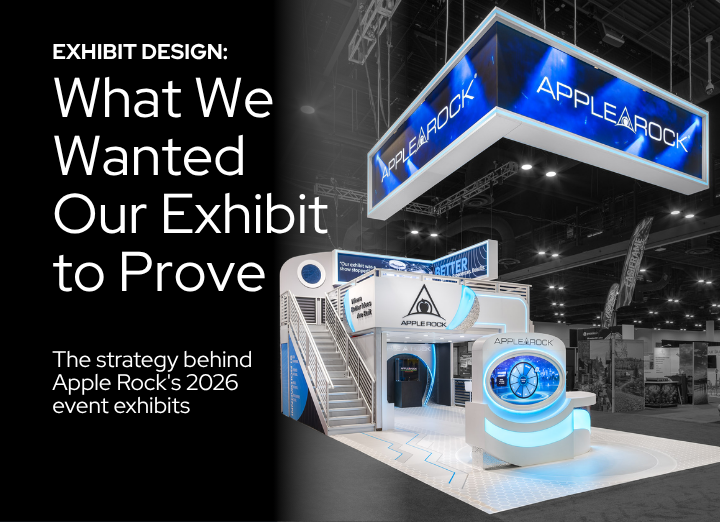
Apple Rock works with teams to build exhibit programs that stay consistent, adaptable, and easier to manage as schedules fill in.