Trade shows are engines of connection, innovation, and growth. They draw tens of millions of professionals together every year to learn, compare, and make decisions that shape entire markets. But they also come with a footprint that’s too big to ignore.
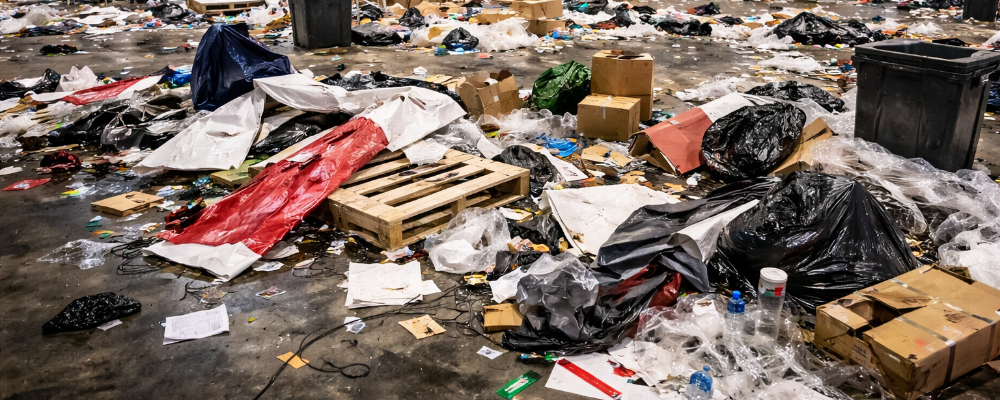
In the United States alone, trade shows generate more than 1.2 billion pounds of waste every year. That equates to roughly 40,000 garbage trucks annually. An estimated 60 percent of exhibition materials are used once and discarded, with much of it heading straight to landfill. That’s before you consider printed collateral, single-use products, carpeting, giveaways and all the logistics that go with transporting heavy gear around the continent.

We can do better. Our industry can do better. And the younger professionals entering our ranks aren’t asking. They are insisting.
For the next generation, sustainability is not something you add at the end. It is as fundamental as electricity in the venue.
That’s not a plea. It’s a direction. And it’s time to lead.
If your sustainability strategy isn’t measurable, it isn’t real
There’s a moment in every sustainability journey where good intentions stop being enough. What separates the talk from the action isn’t aesthetics or catchy wall graphics. It’s meaningful, measurable practice.
Many attendees will generate pounds of waste in a single event day. Some estimates put special events at about 2.5 pounds of landfill trash per person per day. Trade shows aren’t casual gatherings. They are intense, compressed hubs of production and consumption. Every brochure, every giveaway, every panel banner adds up.
What you leave behind on the show floor is part of your brand story.
If that story ends in landfills and incinerators, it’s a story your customers will remember and judge.
Practical, high-impact ways to reduce your footprint
There is no silver bullet. Sustainability in trade shows is a portfolio of choices we make before we build a booth or print a sign. Here’s how the smartest teams are turning promise into result:
Rethink what you build
The old model of “build once and pitch it after the show” is not sustainable.
- Choose modular exhibits that can be resized for different spaces.
- Favor rental components that get reused year after year.
- Source materials that are durable, repairable and recyclable.
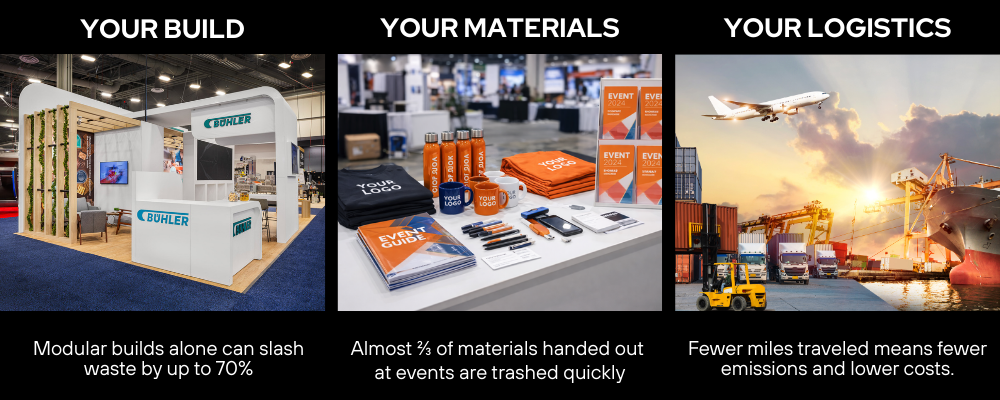
Modular builds alone can slash waste by up to 70%, because the same components work across many events and configurations.
Eliminate waste before it happens
Most show trash doesn’t get created on the final day. It’s built into the system when we design:
- Avoid event-specific printed details that render signage single-use.
- Use digital signage and fabric graphics that can be updated without replacing hard boards.
- Replace paper brochures with app-based content.
Almost two thirds of paper materials handed out at events are trashed quickly. Why spend money on something that will immediately become waste?
Look at logistics through a new lens
Waste is not just what ends up in a dumpster. It is also carbon from trucks, airplanes and containers moving across thousands of miles.
- Consolidate freight and optimize trailer loads instead of shipping partial shipments.
- Work with partners who have facilities near major venues to reduce cross-country hauling.
- Store and maintain assets regionally so they are not traveling unnecessarily between shows.
Small logistical decisions compound. Fewer miles traveled means fewer emissions and lower costs.
Engage your team to make change normal
Sustainability isn’t a campaign. It’s culture.
- Create internal Green Teams.
- Provide sustainability training.
- Celebrate examples of greener planning and execution.
When every person on your team understands the impact of a choice — from swag to flooring — better decisions happen naturally.
What’s at stake
This isn’t about being a “feel-good” brand anymore. It’s about competitiveness, relevance and legacy.
Sustainability is affecting business decisions at every level. Organizers are implementing guidance on sustainable exhibitions. Exhibitors are responding to attendee expectations. Partners are choosing suppliers with intentional practices.
Sustainability done right doesn’t weaken your presence on the floor. It strengthens it.
Consumers, customers and clients are aligning with brands that actually reflect responsible behavior. You don’t get credit for saying the right thing. You earn influence by doing the right thing.
What Apple Rock Believes
We believe in solutions that meet both performance and purpose.
Trade shows should still be vibrant centers of discovery, brilliance and connection. But they can also be environments where:
- Waste is reduced at the source.
- Materials are reused and recycled.
- Logistics are optimized for emissions and efficiency.
- Design decisions reflect climate responsibility and economic pragmatism.
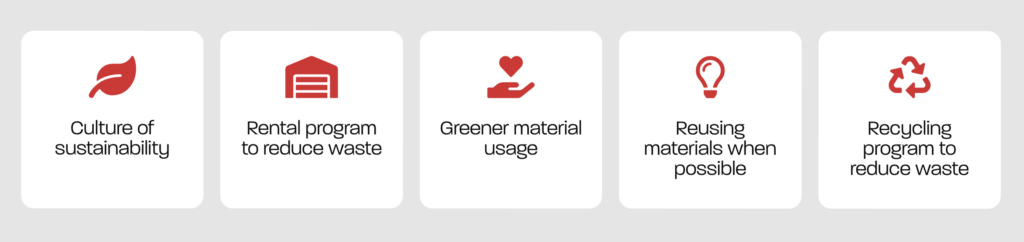
This isn’t a trade-off. It’s good business.
Sustainability does not require perfection. It requires intention.
Measure what matters. Reduce what you can. Reuse what makes sense. Design with longevity in mind instead of novelty. Every decision compounds over time.
Trade shows bring industries together under one roof. That scale carries influence. The materials we choose, the freight we move, the waste we prevent, and the culture we create all signal what kind of future we are willing to build.
The opportunity is not to look sustainable. The opportunity is to be responsible.
And that is leadership worth standing behind.