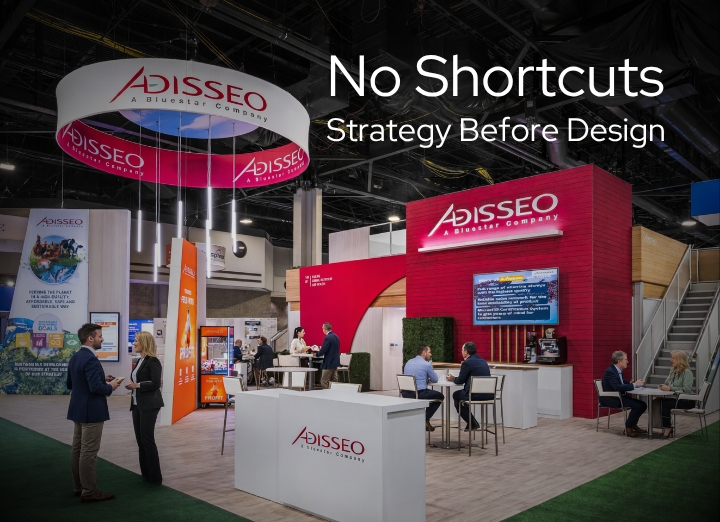
Successful exhibits do not begin with graphics, materials, or technology. They begin with a decision:
What does this experience need to accomplish?
That may seem straightforward, but it is often the point where projects get stalled. Design tends to move to the front of the process because it is visible. It gives teams something to react to. It feels productive. But when the work starts there, design is often asked to answer questions it was never meant to solve.
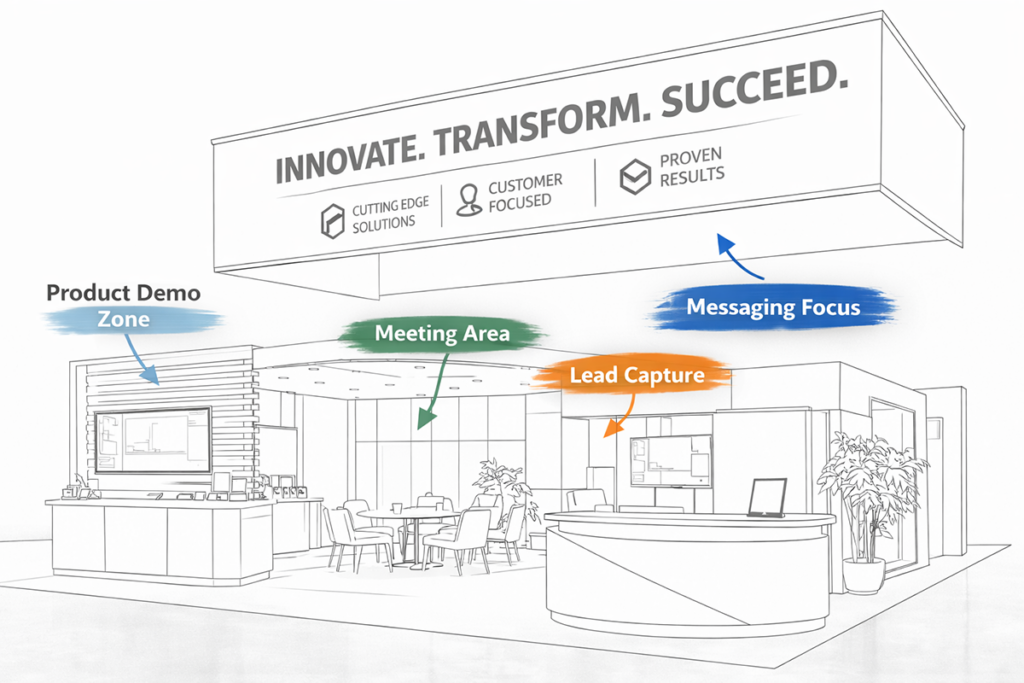
from engagement to conversation to conversion.
An exhibit should not simply occupy space or reflect a brand in a visually appealing way. It should serve a purpose. It may need to
- generate leads
- support product education
- create a stronger setting for meetings
- reposition a brand
- or do several of those jobs at once.
Whatever the objective is, it must be established early enough to shape the decisions that follow.
That is where strategy earns its place.
When strategy leads, design becomes more effective. Messaging is more disciplined. Space is used with intention. Technology supports the experience instead of carrying it. What takes shape is not just an attractive environment, but one built to do something specific.
Without that foundation, the pressure shifts to design to do too much.
- It must attract attention
- communicate value
- organize the visitor experience
- support the sales team
- and create engagement (even when the priorities behind it have not been fully aligned)
That is when an exhibit can appear finished on the surface yet fall short where it counts.
Strategy prevents that from happening.
It brings structure to the process. It helps teams determine what deserves emphasis, what can be simplified, and where investment is most likely to pay off. It also makes collaboration more productive. The design team is not left interpreting a moving target. They are building toward a shared objective.
This does not limit creativity. It gives it something stronger to respond to.
Some of the most effective exhibit environments are not the ones trying to do the most. They are the ones designed around a clear objective and executed with discipline. Each major decision supports that purpose, from the way the space is organized to the way the message is delivered and the way people are meant to engage with it.
That is what it means to invest with intention.
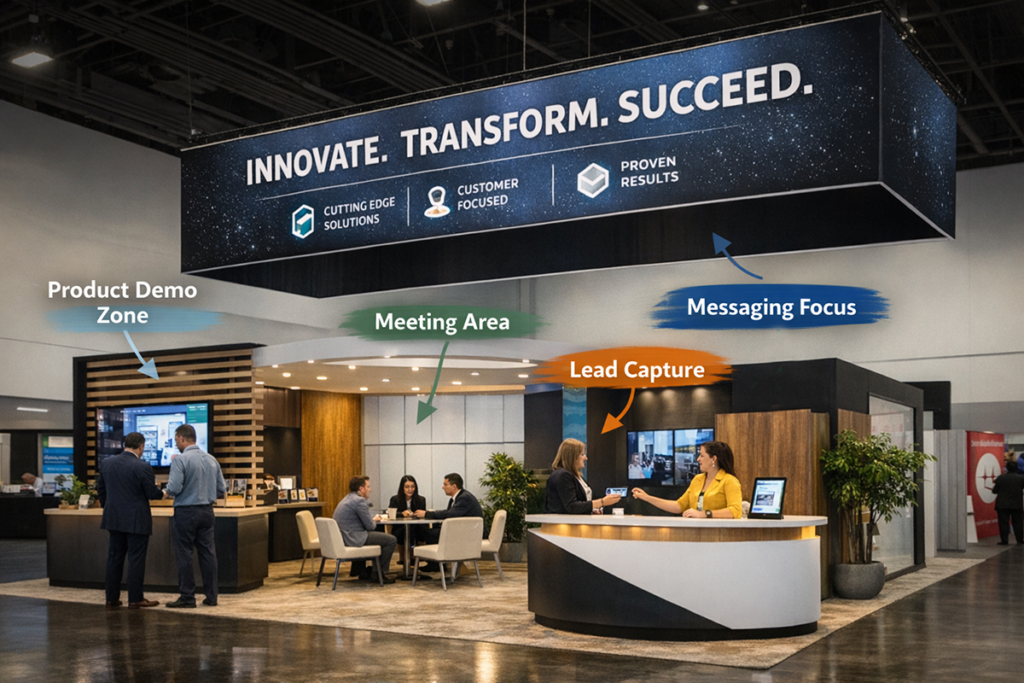
It is also the approach Apple Rock brings to every program we develop. Strategy is not treated as a step to move through. It is the foundation for the decisions that make design more effective, investment more intentional, and results more measurable.
There are no shortcuts to that kind of result. Not in planning, not in decision-making, and not in the design process itself. The brands that get more from their event programs are usually the ones willing to do the harder work first. They define what success requires, align around it early, and build from there.