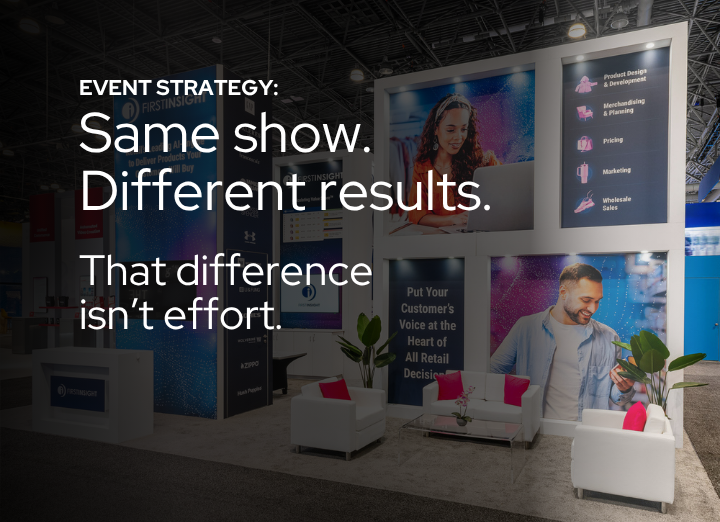
Two companies. Same show. Same budget. Completely different results.
From the outside, it can look like one team simply worked harder.
That’s usually not what happened.
The difference doesn’t come down to effort in the exhibit.
It comes down to how the team was prepared and directed.
What you see
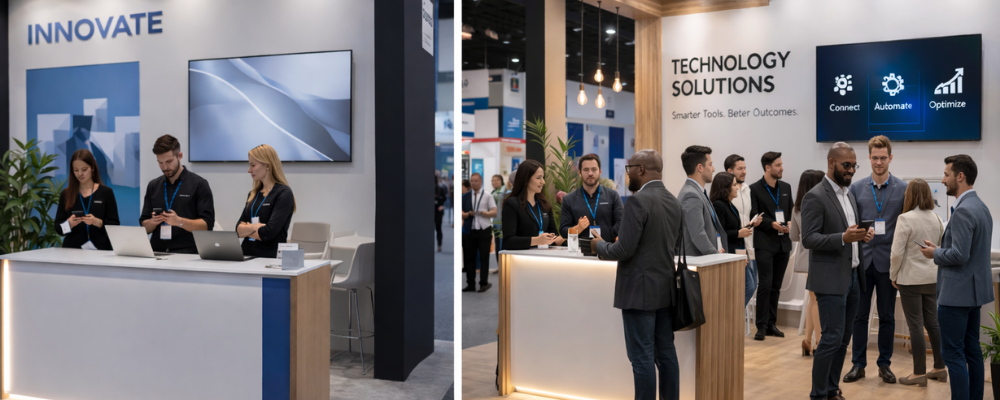
One team is active from the start of the day. They’re in the booth, then out of it, moving between conversations, sessions, and events. They stay until the floor closes, then come back the next morning ready to continue.
The other team stays close to the booth. Conversations are shorter and more transactional. As the day goes on, the pace slows. Packing starts before the show officially ends. Some events get skipped.
From the outside, it can look like one team is simply putting in more effort.
That’s not where the difference comes from.
What’s actually driving it
That difference wasn’t created during the event.
It was set in motion by how the event was planned and communicated to the team.
Most teams don’t underperform because they don’t care. They underperform because expectations were never clearly defined.
Without that direction, people default to what feels safe. They stay in the booth, answer questions, and remain available.
And that becomes the limit of what the event delivers.
The role of leadership
High-performing teams aren’t guessing their way through an event. They’re operating with direction.
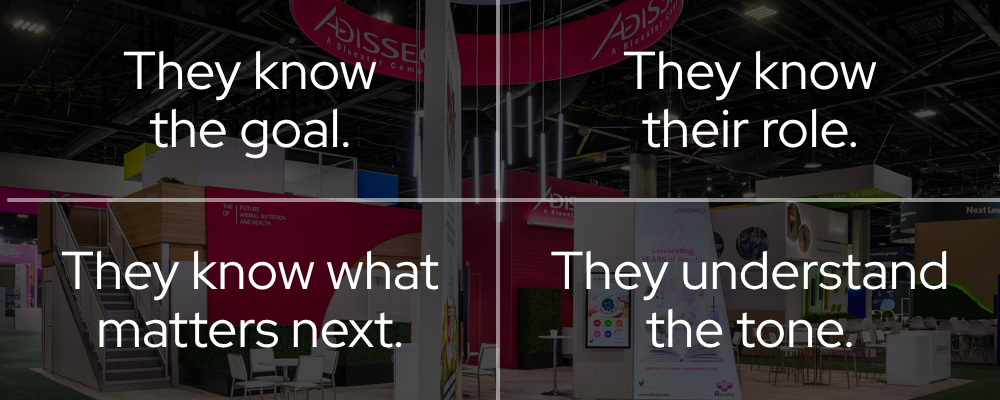
They know the goal.
Not just “get leads,” but what kind of conversations matter, who they’re trying to meet, and what a productive interaction requires.
They know their role.
Who stays anchored in the exhibit. Who steps out to build connections. Who attends sessions and brings back insight.
They know what matters after the show.
Conversations get tracked. Insights get shared. Follow-up is expected.
They understand the tone.
Teams take their cues from leadership. If the event is treated like an investment, it shows. If it’s treated like something to get through, that shows too.
Where most companies miss
The booth ends up carrying the entire expectation.
But it’s only one part of where conversations and decisions happen.
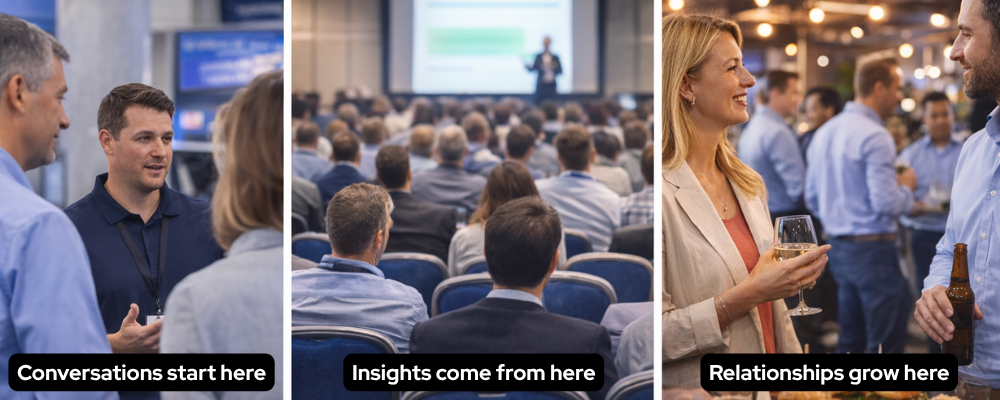
Some of the most valuable moments happen outside of it. In sessions. In hallways. At dinners. In conversations that aren’t scheduled.
If your team isn’t expected to operate in those spaces, they won’t.
Not because they don’t want to. Because they weren’t directed to.
What high-performing teams do differently
They don’t rely on effort alone. They operate with structure.
They stay until the show is over and treat the entire event as part of the job, not just time in the exhibit.
They use sessions to understand the market instead of filling space in the schedule, and they use events to build relationships in a more relaxed setting where conversations can go further.
They focus on the right interactions instead of simply being available.
There’s a plan behind how they operate, not just where they stand during the day.
How that level of performance gets built
Teams don’t arrive at an event ready to perform like this by accident.
It comes from how they’re prepared in the weeks leading up to it.
The strongest teams are given clear direction before the event begins. They understand what success looks like, who they need to connect with, and what kind of conversations matter.
Roles are defined ahead of time. Everyone knows where they’re expected to focus and how they contribute to the bigger picture.
Expectations extend beyond the exhibit. Time at the event is treated as an opportunity to gather insight, build relationships, and move conversations forward.
And just as important, there’s a plan for what happens after. Conversations are documented. Follow-up is prioritized. What was learned gets shared and used.
None of this is complicated.
It just has to be decided ahead of time.
This is where having the right partner matters. Not just to design the exhibit, but to help define the strategy behind how it’s used.
The bigger reality
If a team treats a trade show like a shift, there’s a good chance they were set up to.
Same show. Same budget. Different results don’t happen by accident.
They come from the direction behind the team.
And when that direction is clear, everything else starts to follow.