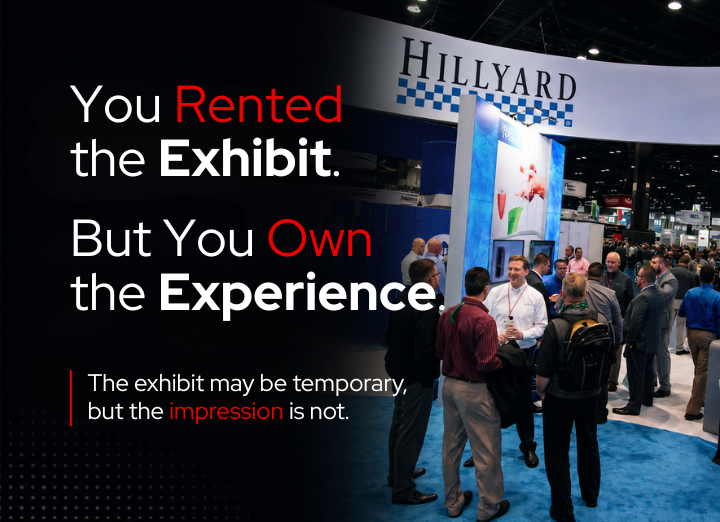
The exhibit may only be on the floor for three days, but the impression can last much longer.
That is true whether the trade show booth is custom, rented, reconfigured, or built from a mix of solutions. Attendees are not walking the show thinking about who owns the structure. They are paying attention to what happens once they enter your booth space. They notice whether your company message is easy to digest, the team is prepared, and if the conversation feels worth their time.
That is the experience. And even when the exhibit is rented, the experience still belongs to your brand.
Rental exhibits are often discussed as practical solutions. They help companies manage changing schedules, tighter timelines, shifting footprints, and different levels of investment from show to show. Yes, all of that matters. But a smart rental strategy can also give your company the flexibility it needs without forcing every event into the same long-term commitment.
An exhibit rental only answers part of the question. It helps answer how the company will be present. It does not answer what your presence is supposed to accomplish.
That is where experiential strategy comes in.
You can rent your exhibit, but you still have to own the purpose behind the event.
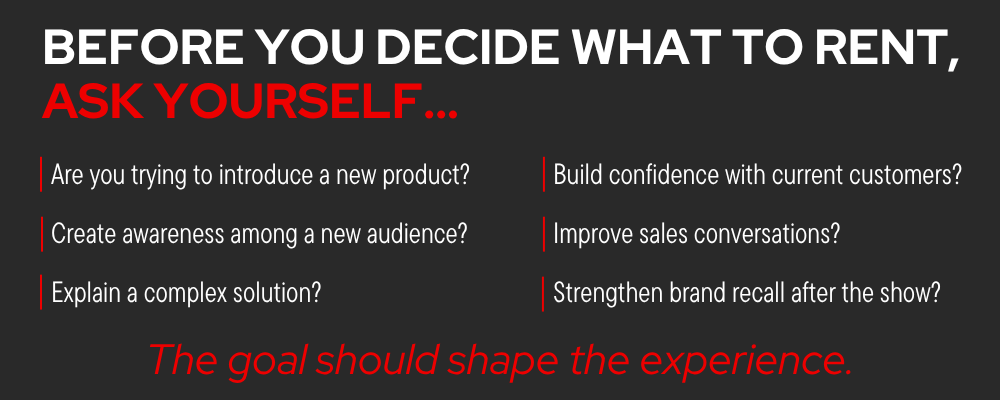
That is where the event is won or wasted.
And this is where rental and experiential marketing can work together in a much smarter way than people often assume. Rental gives companies options. Experiential strategy gives those options direction. One solves the practical challenge of getting to the event. The other makes sure the event has a reason to matter once people arrive.
That does not mean every rental exhibit needs to become a major production. Some events call for a straightforward presence. The team needs to be visible, meet with the right people, and support conversations already in motion. In that case, a simple rental approach can be exactly the right decision.
Other events need more from the experience. A product launch may need to create curiosity. A customer event may need to feel more personal. A new market may require education and credibility. A major industry show may need to communicate confidence at a larger scale.
The point is not that one approach is better than the other. The point is making sure the experience matches the importance of the event.
That is where strong event strategy makes the difference. It keeps your rental from becoming a default decision and turns it into an intentional one. The question is not just, “What can we rent?” The better question is, “What does this event need to accomplish, and how should people feel, think, or act when they leave?”
When that question is skipped, the event can feel transactional. The company attends, occupies the space, has a few conversations, and moves on. Nothing may be wrong, but nothing is especially memorable either.
When that question is answered, the same rental decision can carry more value. The exhibit is no longer just filling a space. It is supporting a business goal. Maybe that goal is protecting key accounts, building confidence in a new market, helping sales explain a complex offer faster, generating qualified opportunities, or giving leadership a clearer read on whether an event deserves a bigger investment next year. That is when renting becomes more than a practical choice. It becomes part of the event strategy.
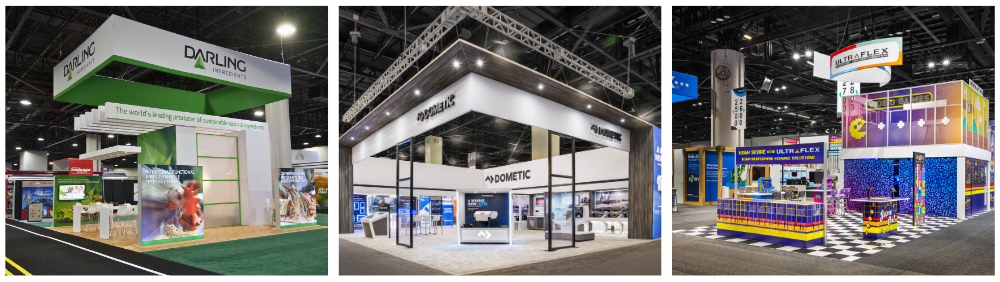
Attendees may not know what was rented, purchased, reused, or custom built. They probably do not care. What matters is whether the event moved the right conversations forward.
Choosing an exhibit rental does not lower the expectation for the event. It simply changes the format. Rental changes the structure, not the standard. The company still owns the outcome.
Apple Rock approaches exhibit rentals as part of the larger event strategy, not as a separate category with lower expectations. The choice may come down to timing, budget, footprint, market opportunity, or the role of the show in the larger program. But once rental is the right answer, the standard should not drop. The event still needs a purpose. The audience still needs a reason to engage. And the investment still needs to support a business goal.
Renting the exhibit is one decision. Making the event work for you is the bigger one. Apple Rock can help you connect the rental strategy to the goals behind the show.