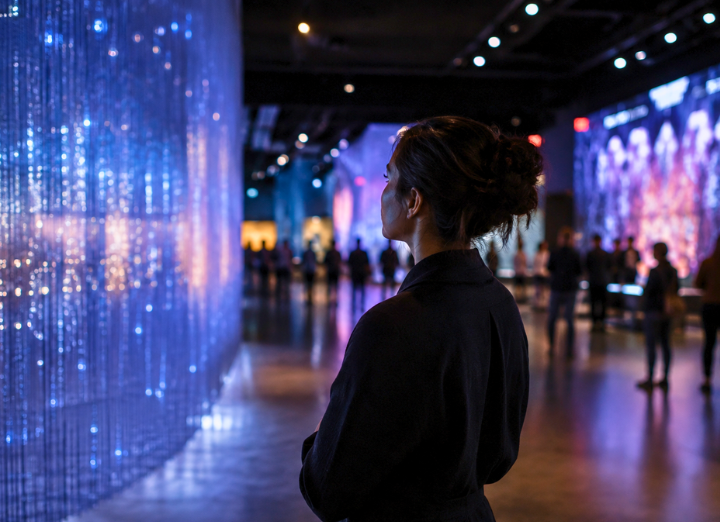
We spend an incredible amount of time designing experiences that people may only remember in fragments.
At first, that feels almost unfair. Months of planning become hundreds of decisions, thousands of interactions, and, a few weeks later, only a handful of lasting memories. It’s easy to look at that reality and assume something was lost along the way.
The more I thought about it, the more I wondered if we’d simply been expecting memory to do something it was never designed to do. That question stayed with me until a conversation a few weeks after one of our clients hosted an experiential event.
By every measure, the event had been a success. Attendance was strong. Conversations happened throughout the day. People stayed engaged. The environment worked exactly as intended. Months of planning had resulted in an experience the client felt proud of.
Then the client shared something they couldn’t explain.
As they began reconnecting with people who had attended, many struggled to immediately recall much about the event. They remembered enjoying themselves. They remembered it had been worthwhile. But when asked what stood out, there was often a pause.
Then someone mentioned a single detail.
“Remember the tasting?”
“Oh…that’s right.”
“Remember where we were talking after the demonstration?”
“I’d forgotten about that.”
Almost instantly, the experience began rebuilding itself.
How could an experience that required months to create become only a handful of memories a few weeks later?
At first, I assumed people had simply forgotten. Then I wondered if the event hadn’t been as memorable as we believed. After all, if people struggled to recall it only a few weeks later, maybe we’d overestimated its impact.
But neither explanation held up for very long.
The event had accomplished exactly what it was supposed to accomplish. People enjoyed it. Conversations happened. Relationships were formed. Business moved forward.
It turned out I had been expecting memory to do something it was never designed to do.
We tend to think of memory as preserving experiences from beginning to end. That’s certainly how I had always pictured it. But memory researchers describe something very different. One way to think about memory is that it isn’t trying to preserve everything we experience. Instead, it appears to prioritize information our brains judge to be meaningful, emotionally significant, surprising, or useful for future behavior.
Instead of wondering why people forgot so much of the experience, I found myself wondering why they remembered the parts they did.

Think about everything that happens during a conference, museum visit, customer experience center, trade show, or corporate event. Within a matter of hours we encounter thousands of sights, sounds, conversations, products, demonstrations, signs, movements, and decisions. Remembering all of them equally wouldn’t simply be difficult. It would make memory far less useful. Instead, our brains compress experiences into something much smaller, organizing them into episodes rather than preserving them as one uninterrupted story.
Nobody remembered the entire event. They remembered scenes from it, which turns out is remarkably consistent with how psychologists believe memory works.
Researchers have spent decades studying why some moments survive while others disappear. Although memory is far too complex to reduce to a single formula, the same patterns appear repeatedly. Experiences that feel emotionally significant, personally relevant, unexpectedly different, or connected to meaningful sensory cues are more likely to survive the brain’s editing process. Even a familiar aroma can unlock memories that seemed completely lost.
The client hadn’t uncovered a flaw in the event. They had uncovered how memory works. Companies, visitors, and memory aren’t experiencing the same event in the same way.
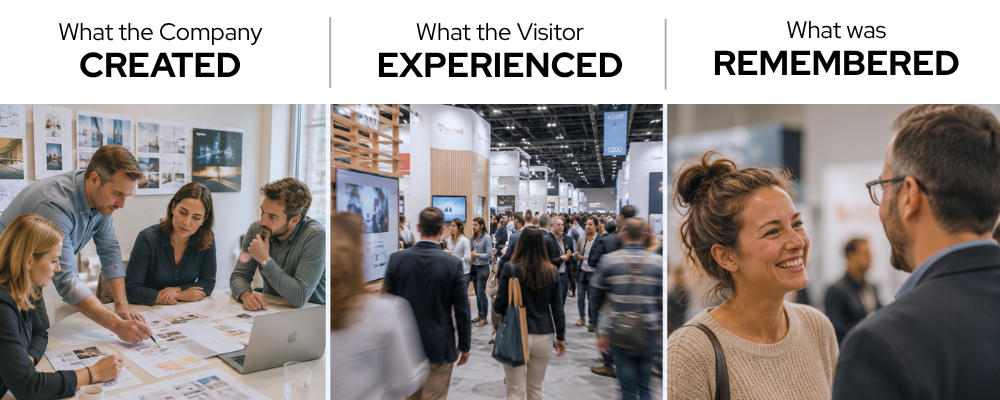
Companies remember every decision because they made every decision. Visitors don’t. They experience only the finished environment, and memory compresses even that into a handful of episodes.
Three different versions of the same experience exist at once: the one the company created, the one the visitor experienced, and the much smaller one the brain eventually decided to keep.
That changed the way I think about designing experiences.
The lighting may never become the memory, but it can help create the atmosphere where an important conversation happens. A tasting may not be remembered because food was served, but because it transformed an abstract description into something personal. A meeting area may disappear from memory entirely, while the relationship that began there continues for years.
Perhaps that’s the part of experiential design we talk about the least. The goal isn’t to make every design decision memorable. It’s to create an environment where the moments most likely to survive have every opportunity to happen.
If our brains are only going to keep fragments of every experience, perhaps memorable design isn’t about making everything unforgettable. Perhaps it’s about recognizing that memory is already editing the experience while it’s happening.
If memory is already deciding what to keep, how should that change the way we design experiences?
Related Insights
- Why Do Some Experiences Stay With Us?
 Months of planning can result in an experience people remember only in pieces. Why? This article explores how memory shapes what we keep, what we forget, and why memorable design may have less to do with creating more and more to do with understanding what the brain chooses to preserve.
 - Why Does a Five-Minute Wait Sometimes Feel Longer Than Fifteen?We’ve all experienced it. One five-minute wait feels endless while another is over before we realize it. The psychology behind that difference reveals something every business should understand about customer perception.
- Trade Shows Aren’t the Only Place Customer Relationships Are BuiltTrade shows are an important part of building new business, but they don’t have to be the only place customer relationships grow. Discover how hosted events, branded environments, and regional experiences can create deeper conversations, stronger connections, and lasting trust.
Let’s Create Something Worth Remembering
If you’re planning a trade show exhibit, experiential event, or branded environment, we’d love to help.