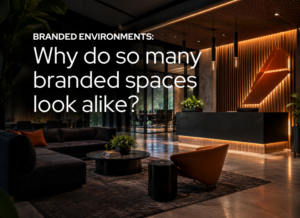
Please don’t design your office around what’s trending on Pinterest.
There’s nothing wrong with wanting a contemporary space. Bold colors, unexpected materials, dramatic architectural features and a little creative risk can produce extraordinary results. In fact, some of the most memorable environments are the ones willing to challenge convention.
But there’s a difference between being inspired by contemporary design and borrowing so much of it that your space starts looking like everyone else’s.
And when you’re investing in an environment that’s supposed to distinguish your company, that’s a rather expensive contradiction.
The trouble with everyone having good taste
There’s something curious about branded environment design. Companies invest considerable time and money creating spaces that distinguish them from competitors, then arrive at the first design meeting with inspiration images that look remarkably similar.
And who can blame them? The images are beautiful. The architecture is striking. Every detail appears carefully considered, and it’s easy to imagine your own company occupying something equally impressive.
The trouble is that inspiration can actually become imitation.
Nobody walks into a design meeting and asks for an office that looks like five other offices. Quite the opposite. They want something distinctive, something that feels unmistakably theirs.
Someone loves an entrance they saw at another company. Someone else remembers a reception area from a recent trip. A third person brings an image from a project that won an architecture award. Each suggestion is reasonable, and none feels particularly unoriginal on its own.
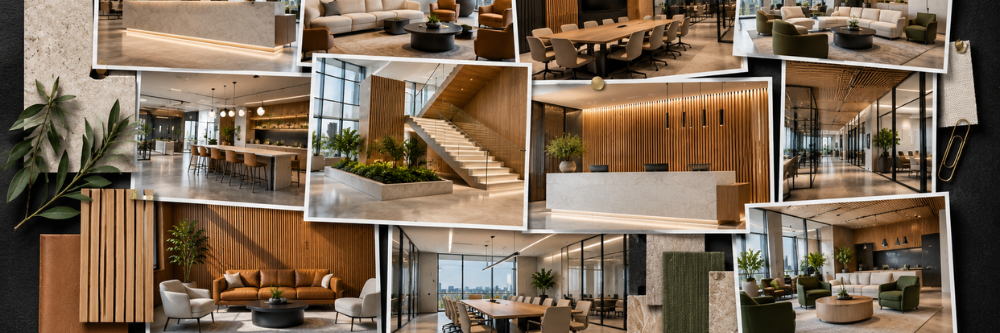
You haven’t necessarily made any bad design decisions. You’ve simply made several popular ones.
And that’s the interesting part. A space can become generic without anyone ever making a conscious decision to play it safe. Sometimes it’s the cumulative effect of perfectly reasonable choices that were never considered together.
That’s where a designer needs to look beyond the images themselves. Maybe what attracted you to that dramatic entrance wasn’t the architecture, but the sense of arrival. Perhaps the reception area appealed to you because it felt welcoming, not because you particularly loved the desk.
Those distinctions give us room to develop an original response rather than recreate someone else’s solution. The objective isn’t to combine everyone’s favorite features into one impressive environment. It’s to understand what makes those ideas appealing and develop something that belongs to your company.
Inspiration should start the conversation, not define the design.
Following what’s popular isn’t the only way to end up looking like everyone else. Sometimes the determination to avoid trends produces something equally predictable.
Timeless doesn’t mean beige
There’s a persistent idea that designing for longevity means playing it safe.
Neutral colors, conservative finishes and familiar architectural details might seem like a reasonable way to protect your investment. Nothing too unusual. Nothing that could possibly look dated in five years.
Of course, there’s a small problem with that approach. You can eliminate every potentially controversial decision and still end up with a space that nobody particularly remembers.
An environment doesn’t become timeless simply because you avoided making a statement.
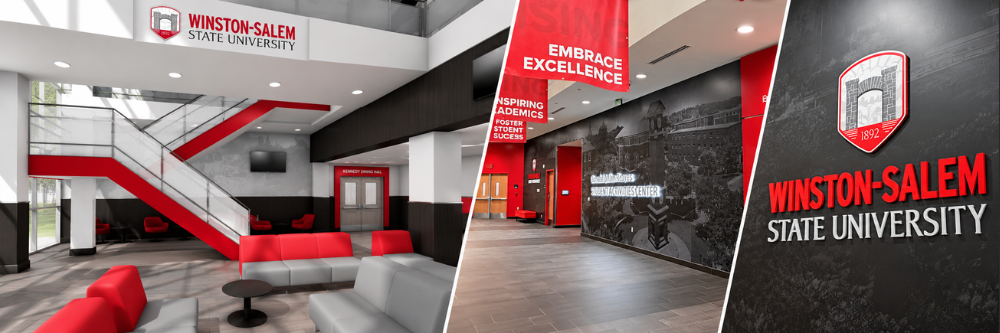
Some of the most enduring spaces have extraordinary personality. Their defining features aren’t subtle, conventional or especially cautious. They remain compelling because the decisions feel appropriate to the organization and the architecture, rather than dependent on whatever happens to be fashionable.
That doesn’t mean every ambitious idea deserves a permanent place in your building. Some features are expensive to change, and others can be refreshed relatively easily. Knowing the difference matters, particularly when your company may evolve considerably over the life of the space.
And sometimes the right answer isn’t to make an ambitious idea smaller or safer. Sometimes it’s to explore it further until you discover what makes it worth pursuing.
I love an unconventional idea. I love it even more when there’s a good reason behind it. As a designer, my job isn’t to talk you out of taking risks.
It’s to take that crazy idea and make it make sense.
Related Articles
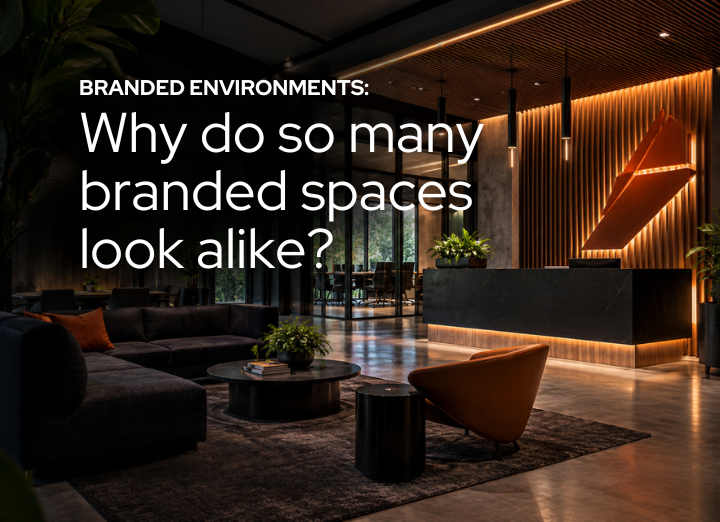
- Why Do So Many Branded Spaces Look Alike?
 Companies invest in branded environments to create something distinctive, yet so many spaces end up looking remarkably similar. How does inspiration become imitation, and why doesn’t playing it safe guarantee a timeless design? We explore the curious contradictions behind originality, design trends, and the decisions that give a space its own identity.
- Trade Shows Aren’t the Only Place Customer Relationships Are BuiltTrade shows are an important part of building new business, but they don’t have to be the only place customer relationships grow. Discover how hosted events, branded environments, and regional experiences can create deeper conversations, stronger connections, and lasting trust.
- Your Space Still Has a Job to DoBy the time someone walks through your door, they may already know your brand online. A strong branded environment helps confirm that confidence in person and turns the visit into trust, connection, and pride.